The Yeast Behind Dandruff Might Also Help Fade Dark Spots
By Kara Ashe · March 26, 2026 · 2 min read
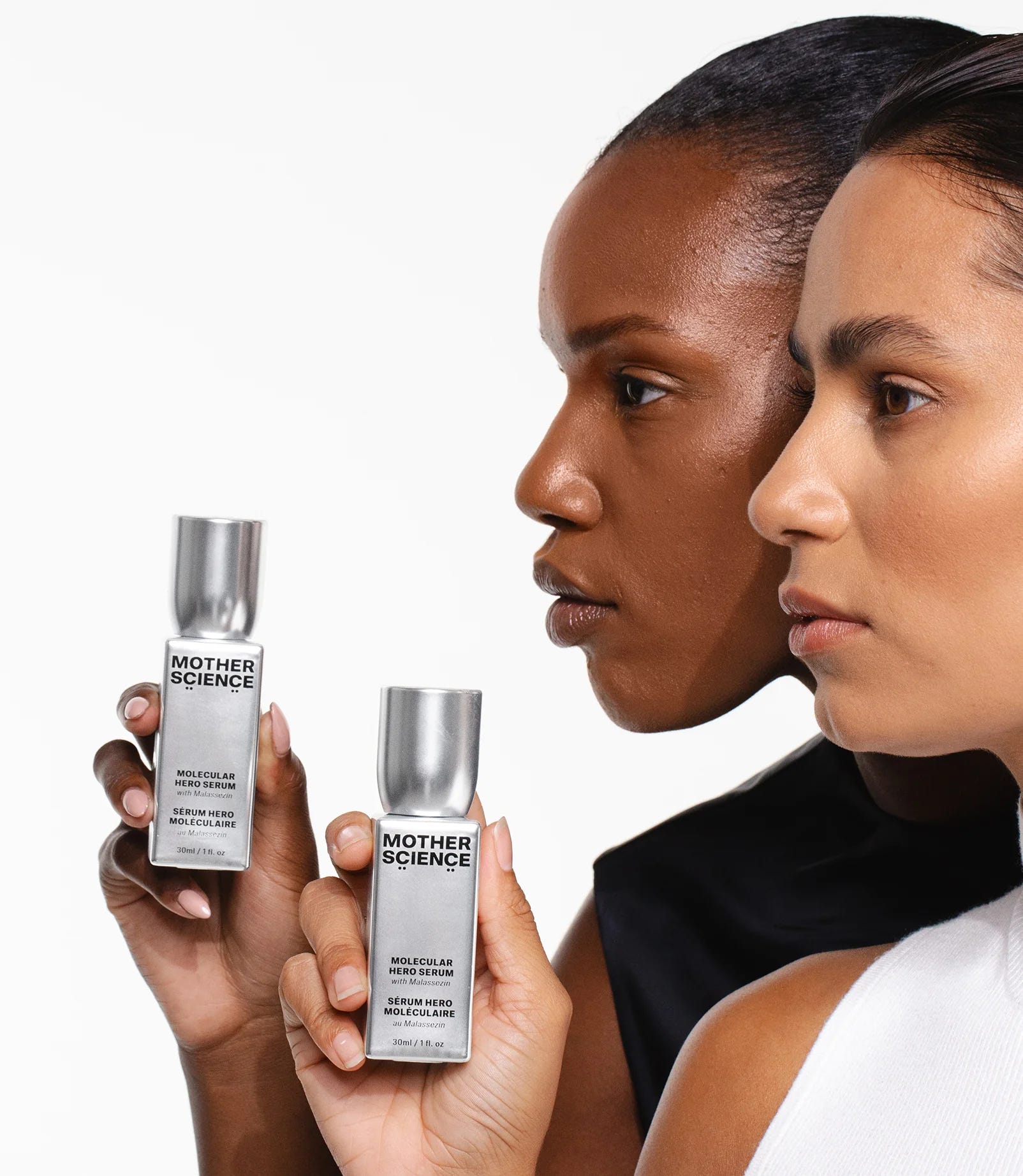
If you deal with hyperpigmentation but can’t tolerate vitamin C or niacinamide, you’ve probably felt stuck.
A lot of “brightening” products assume your skin can handle strong actives, but if your skin is reactive or compromised, those same ingredients can make things worse.
Cut to: an innovative brightener that’s not an acid derived from external sources (like fruits, fungi, etc). Instead its from a molecule found in a yeast your body already houses.
The surprising source: your skin’s microbiome
There’s a yeast called Malassezia furfur that naturally lives on your skin. While it’s associated to issues like dandruff and skin irritation, it also produces a recently discovered (and patented) compound called malassezin.
Through years of clinical research, Malassezin has been shown to:
Help regulate melanin production
Improve the appearance of hyperpigmentation
Act as an antioxidant
In other words, something already present on your skin can be applied to improve the way your skin handles discoloration.
Why this matters (especially for sensitive skin)
Most routines rely on traditional brighteners like Vitamin C, Niacinamide, and exfoliating acids. While these are well-loved and highly effective, not everyone tolerates them well.
Malassezin is positioned as a gentler alternative, particularly for people dealing with reactive skin, barrier damage, and general sensitivity to traditional actives.
The product that brought this to market
Right now, Mother Science is the only brand formulating with malassezin (which they’ve patented). Their line uses a biotech-derived version of the molecule to create a stable topical formula. The result is a line designed to:
Improve the look of uneven tone
Support a more balanced complexion
Deliver antioxidant support without the irritation some people experience with traditional brighteners
My experience using it
I’ve been using this serum consistently since it launched in 2023.
What stood out to me wasn’t just the brightening effect — it was how it caused me no irritation, compared to other actives I’ve tried.
For anyone who’s struggled with the trade-off between results and sensitivity, that is meaningful.
A bigger shift happening in skincare

This really points to a broader trend. The industry is veering from just inundating skin with “stronger actives” to ushering in innovation that works with the skin’s biology.
The takeaway
If your skin tolerates traditional brightening ingredients, you may not need something like this. But if you’ve been stuck — reactive skin, barrier issues, limited options — malassezin is one ingredient worth paying attention to.
If you found this helpful, I’ll break down next:
And how to build a routine that doesn’t compromise your skin barrier